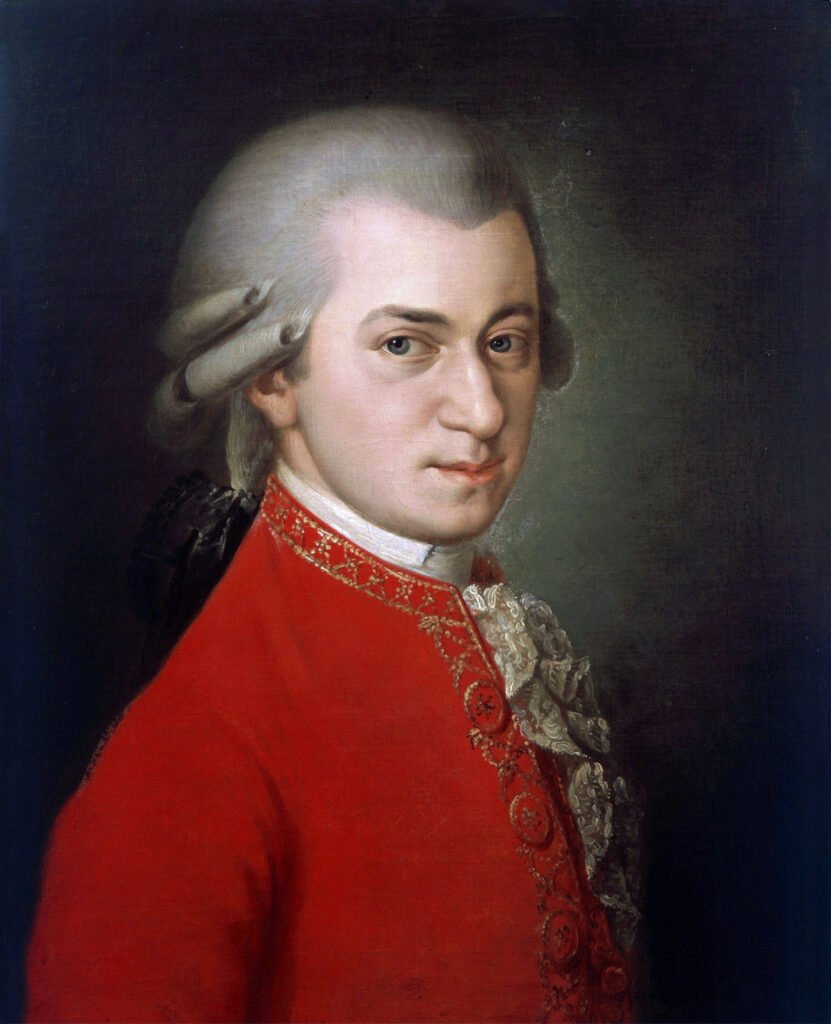
Biography
Wolfgang Amadeus Mozart: Classical Clarity on Six Strings
Wolfgang Amadeus Mozart (1756–1791) was an Austrian composer whose operas, symphonies, concertos, chamber music and keyboard works embody extraordinary melodic invention, dramatic instinct and Classical balance. Mozart did not leave an established original repertoire for solo guitar; arranging his music therefore asks the instrument to recreate music conceived for very different forces without losing its clarity and momentum.
A Composer of Stage, Orchestra and Keyboard
Mozart wrote with a remarkable understanding of instrumental character. In his orchestral and operatic music, individual lines converse constantly; in his piano music, accompaniment and melody can suggest an entire ensemble. Those qualities offer fertile material for transcription.
Rondo Alla Turca
The celebrated Rondo Alla Turca is the final movement of Mozart’s Piano Sonata No. 11 in A major, K. 331. On solo guitar, its crisp rhythms, contrasts and brilliant figurations become a study in rhythmic precision, rapid articulation and the illusion of several musical layers within one pair of hands.
Did Mozart Write for Guitar?
There is no standard body of original Mozart works for classical guitar comparable with the repertoire of Sor or Giuliani. Modern guitar performances of Mozart are principally arrangements and transcriptions. The value lies not in pretending Mozart wrote for the instrument, but in discovering how convincingly his musical ideas can be reimagined on it.
Why Play Mozart on Classical Guitar?
Mozart exposes everything. His transparent textures demand clean voice leading, elegant phrasing, controlled ornamentation and precise rhythm. On guitar there is little room to hide, making his music an excellent test of refinement and balance.
From Piano Texture to Guitar Texture
A guitarist must redistribute Mozart’s materials across six strings and decide what is essential. A successful arrangement preserves melody, bass direction and harmonic character while allowing the result to feel idiomatic rather than mechanically reduced.
Legacy and Influence
Bringing Mozart to solo guitar is both homage and transformation. It lets listeners hear familiar Classical music through a more intimate palette while challenging the guitarist to recreate pianistic energy with colour, articulation and phrasing.