Biography
Johannes Brahms: Romantic Depth and Rhythmic Fire
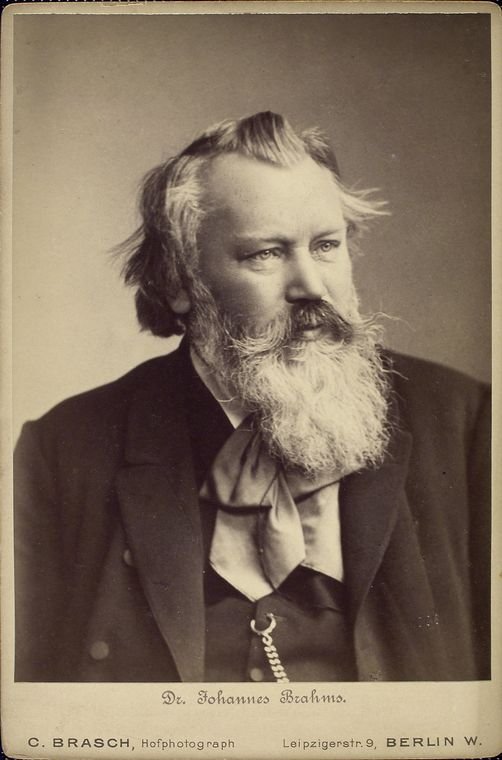
Johannes Brahms (1833–1897) was a German composer and pianist whose music combines Classical discipline with the harmonic richness and emotional depth of Romanticism. For the guitarist, Brahms presents a fascinating problem: how can dense Romantic texture and orchestral weight be transformed into music for six strings without losing momentum or character?
The Hungarian Dances
Brahms’s Hungarian Dances began as works for piano four hands and became among his most popular compositions. Their sharp rhythmic changes, contrasting moods and dance energy inspired numerous arrangements for different instrumental combinations.
Hungarian Dance No. 5
Hungarian Dance No. 5 is especially famous for its driving rhythms, sudden changes of tempo and strongly contrasted sections. In a solo-guitar arrangement, the performer must suggest melody, accompaniment, bass accents and ensemble-like changes of character within a single texture.
Romantic Texture on Six Strings
Brahms often thinks in rich inner voices and thick harmonic sonorities. A guitar cannot simply reproduce every note. The arranger must decide which voices define the harmony and which gestures carry the musical identity, then redistribute them so the result feels natural on the instrument.
Why Play Brahms on Classical Guitar?
Brahms develops rhythmic flexibility, chordal control, voicing and large-scale phrasing. His music pushes the guitar beyond a purely delicate image and asks it to suggest weight, orchestral breadth and passionate contrast.
Arrangement as Re-Orchestration
Transcribing Brahms is less about shrinking an original score than about re-orchestrating its priorities. Bass lines become guitar basses, orchestral accents become carefully voiced attacks, and melodic lines must be projected through changing textures.
Legacy and Influence
The intimacy of the classical guitar creates an unusual perspective on Brahms. Rhythmic details and inner voices that can be absorbed into a larger ensemble become exposed, allowing the listener to encounter the architecture of the music at close range.