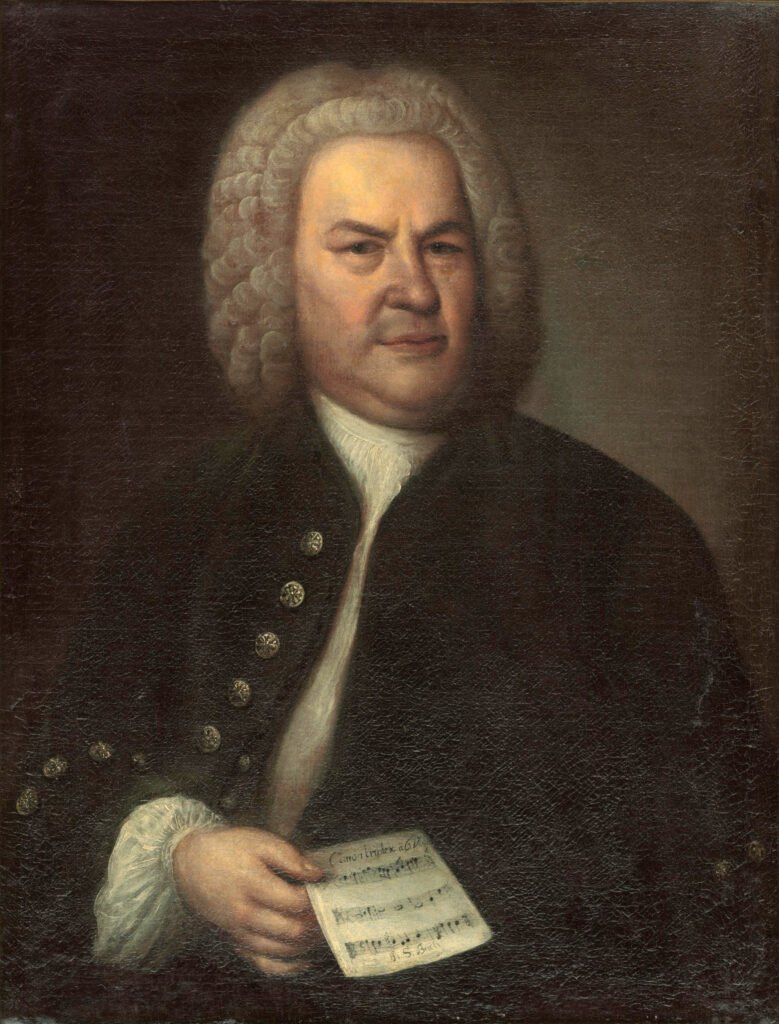
Biography
Johann Sebastian Bach: Architecture, Counterpoint and the Guitar
Johann Sebastian Bach (1685–1750) was a German Baroque composer, organist and keyboard virtuoso whose music has become foundational to Western classical repertoire. For guitarists, Bach is especially important because his music is built from independent voices, harmonic direction and clear musical architecture—qualities that can be exceptionally revealing on a plucked instrument.
Bach and the Lute Tradition
Bach left a group of works associated with the lute and lute-harpsichord tradition, commonly catalogued around BWV 995–1000, together with BWV 1006a. Several are themselves arrangements of earlier works for cello or violin. This history makes transcription part of Bach’s own musical world, and modern classical guitarists have found a particularly natural home in this repertoire.
Air on the G String and the Art of Transcription
The famous Air comes from Bach’s Orchestral Suite No. 3 in D major, BWV 1068. On solo guitar, the challenge is to preserve its sustained singing line while simultaneously carrying bass, harmony and inner voices. The guitarist must think like several musicians at once.
Prelude in C Major, BWV 846
The Prelude in C major from The Well-Tempered Clavier, Book I, was written for keyboard, yet its flowing broken-chord texture translates compellingly to guitar. The instrument reveals the individual notes inside each harmony while allowing the performer to shape the larger harmonic journey.
Why Play Bach on Classical Guitar?
Bach develops a guitarist’s independence of voices, control of articulation, harmonic awareness and sense of structure. A successful transcription is not simply a reduction of notes: it asks how bass, melody and inner parts can remain intelligible on six strings.
For Paco Hallak’s Arrangements for Solo Classical Guitar, Bach represents a direct bridge between historical plucked-string practice and the modern classical guitar.
From Many Voices to Six Strings
When orchestral or keyboard music is arranged for solo guitar, orchestral colour must be recreated through register, articulation, dynamics and tone production. Bach’s transparent counterpoint makes every decision audible, turning transcription into both an artistic interpretation and a study of musical structure.
Legacy and Influence
Bach’s music has become central to the classical-guitar world not because it was originally conceived for the modern guitar, but because its musical logic survives—and often shines—when translated to the instrument. His lute-associated works and his own practice of reworking music across instruments make that relationship especially meaningful.